Thread Tapping Machines for MCB / MCCB Production
Recommended Models For MCB / MCCB Production
There are dozens of models available from maual, semi-automated to full automated thread tapping machines. Here listed a few models specialized for MCB / MCCB production.
The selection was based on 3 hard requirements: the machine can handle small parts, can tap fine threads reliably, and can be fed continuously in volume.
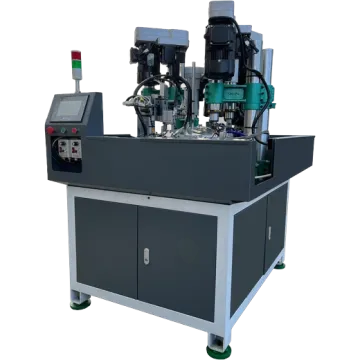
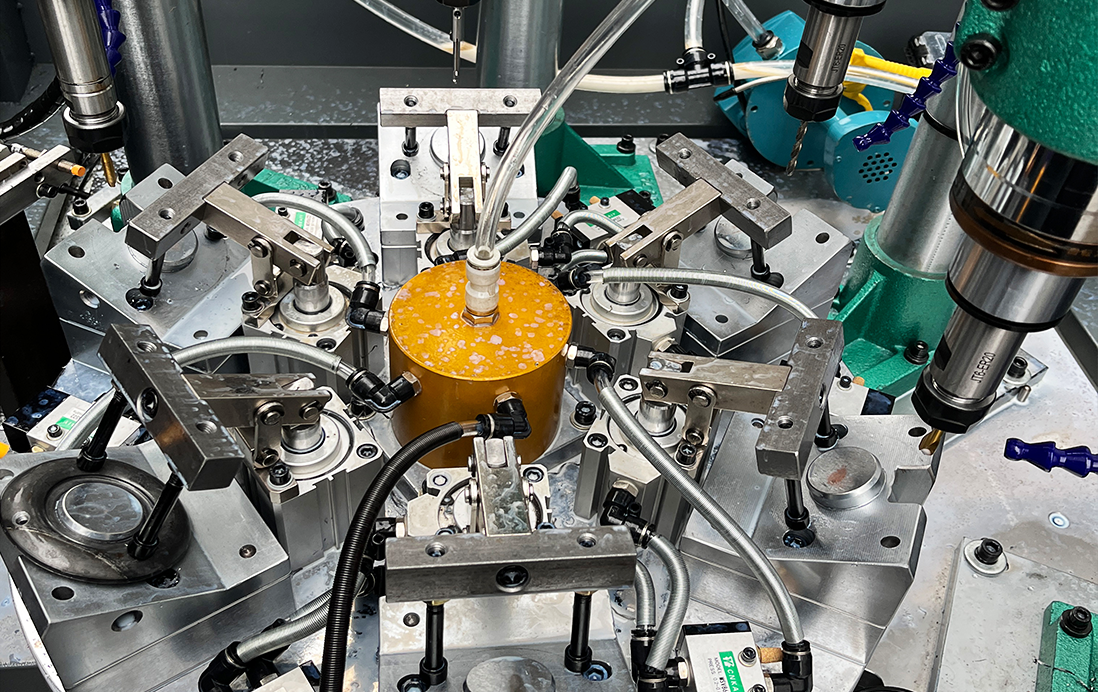
A rotary multi-station layout fed by a vibratory bowl performs drilling, reaming and chamfering sequentially on the table. The parts in the bowl are M3–M6 class screws, comparable in size to breaker terminal screws and small linkage pins.
- Rotary multi-station: operations concentrated, one datum throughout
- Vibratory bowl orienting feed, ideal for small screws and pins
- Reaming holds small-hole accuracy and leaves stock for later tapping or riveting
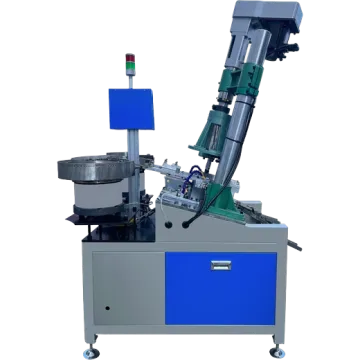
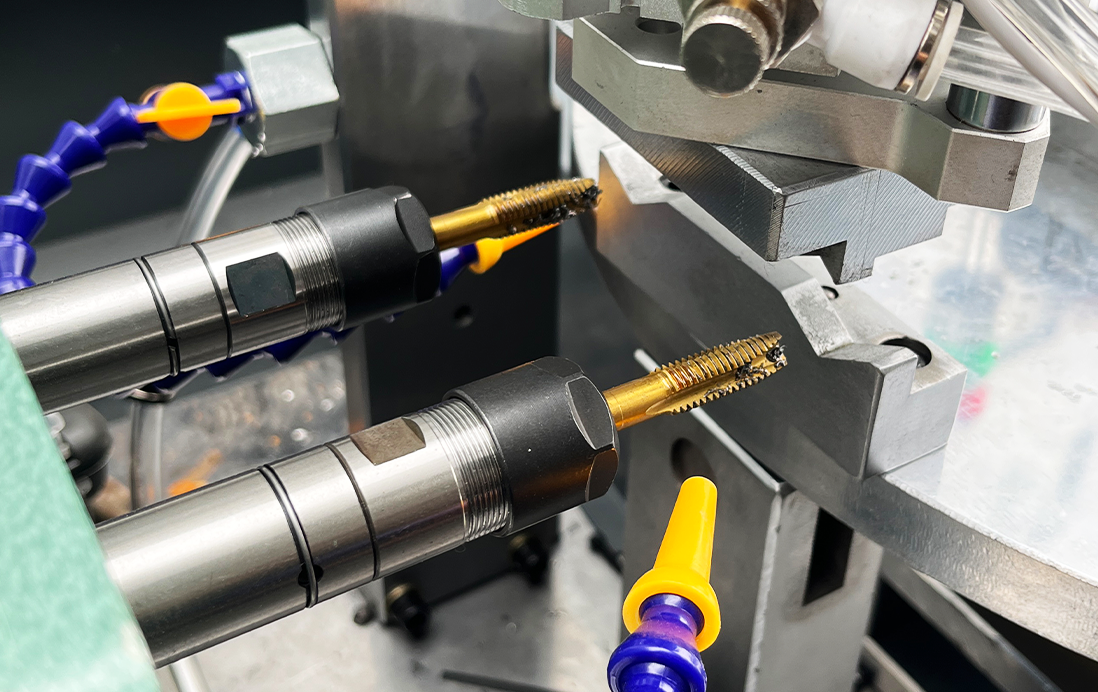
Parts are fed by a vibratory bowl and travel along a straight slot into two stations where two taps work simultaneously, producing two parts per cycle. The sample parts are small brass and steel nuts — exactly the shape of breaker terminal nuts and insert nuts.
- 2-up design, roughly doubling output from one machine
- Short straight-slot feed path reduces jamming of small nuts
- Independent tap per station, easy to set per thread size
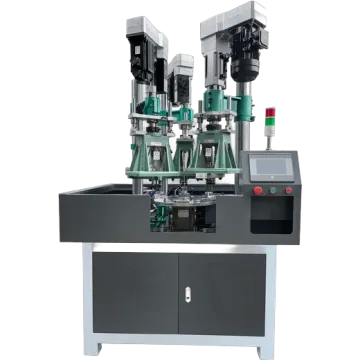
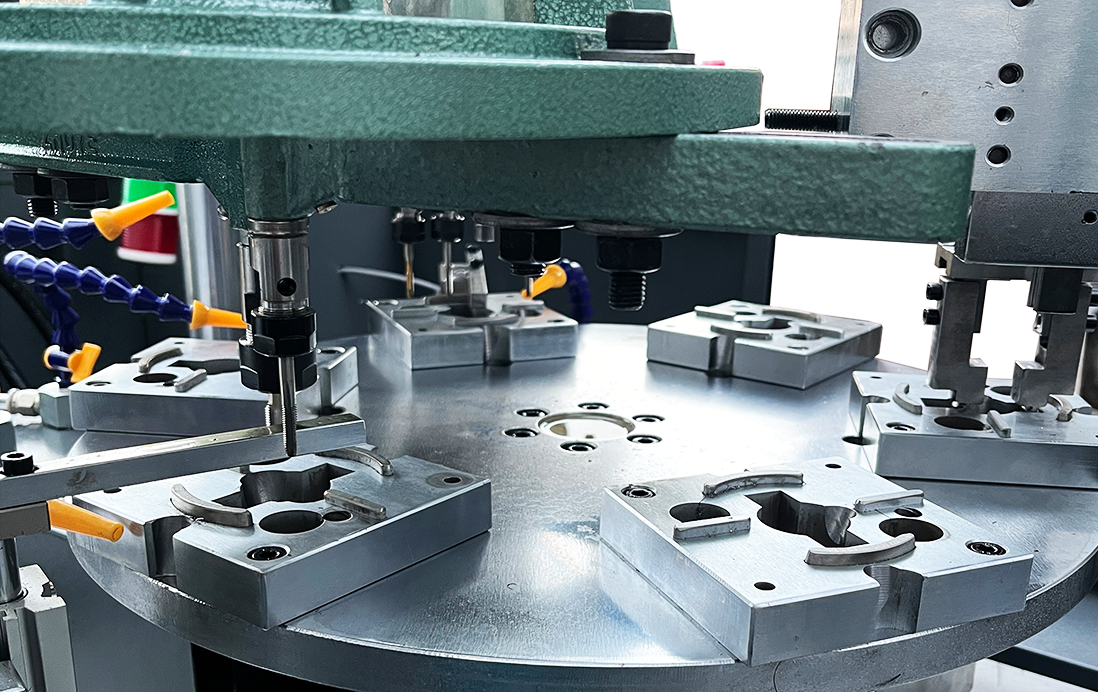
An eight-station rotary layout where fixtures locate on the profile of small die-castings and drilling and tapping heads are distributed around the table. The sample part is a small aluminium die-casting with a sloped face and internal thread, close to breaker internal castings.
- Eight stations for parallel operations and a high cycle rate
- Clamp-type location suits irregular small die-castings
- Chip evacuation clearance between stations for aluminium
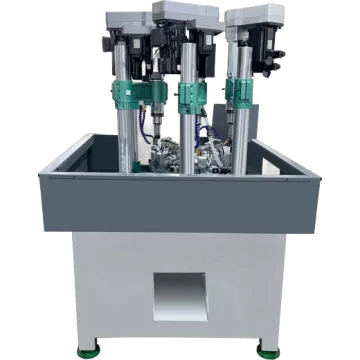
A three-operation rotary machine: drilling, chamfering and tapping are carried out at separate stations on the table, so one loading produces a finished part. Ideal for terminal-type parts with strict requirements on thread-mouth burrs.
- Drill–chamfer–tap in one machine, less handling and re-clamping
- Dedicated chamfering station removes burrs and rolled-over edges
- Multiple power heads, cycle governed by the single table index
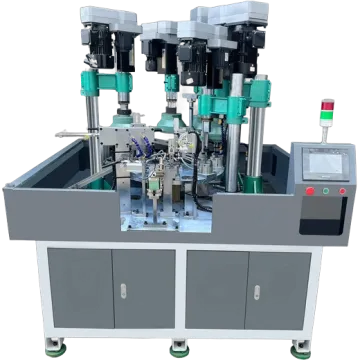
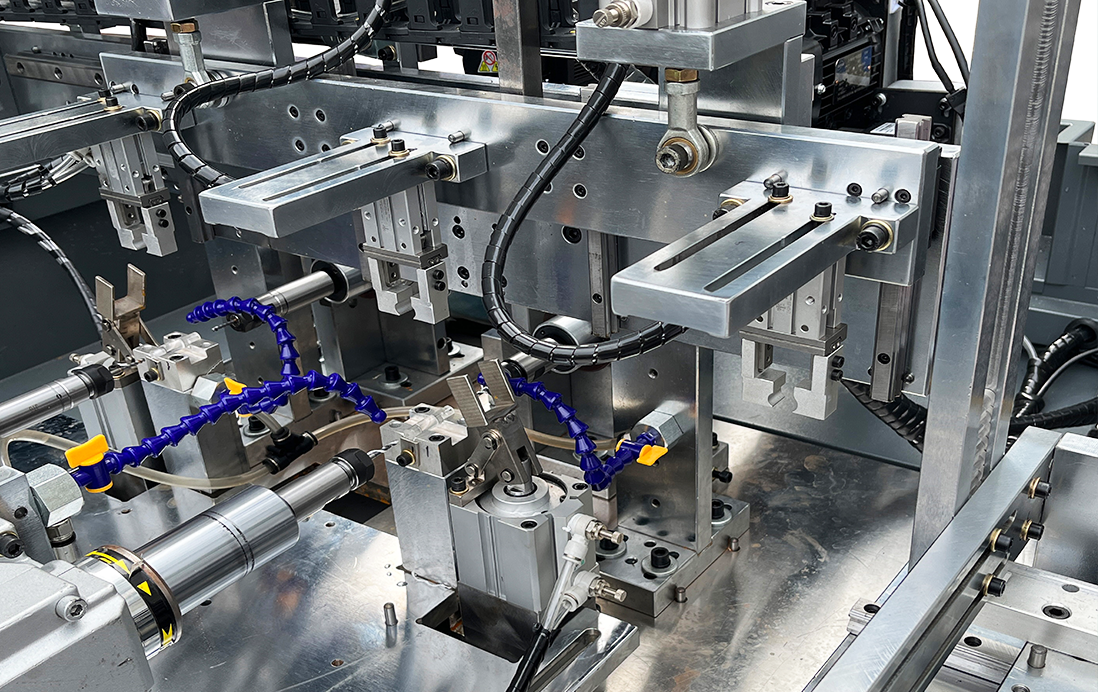
A vertical multi-head layout that concentrates drilling, chamfering and tapping on one machine, with touch-screen PLC control. It replaces three separate machines with a single loading operation.
- Four power heads arranged in parallel — fewer machines, smaller footprint
- Touch screen plus PLC, parameters stored and recalled per part
- Less transfer between stations, avoiding secondary damage to parts
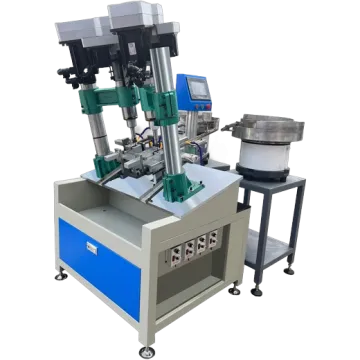
A chamfering machine on the same platform as the 2-up tapping machine: vibratory bowl feeding, with heads on both sides chamfering two parts at once. The sample part is a small hex piece, used to remove burrs from hole mouths and end faces before or after tapping.
- 2-up design with a cycle rate matched to the tapping machine
- Can be placed before or after tapping as a deburring unit
- Works with both steel and brass parts
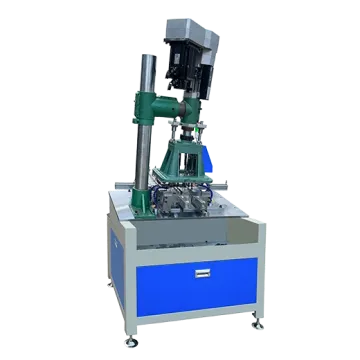
A 2-up multi-station machine; the part is a stamped steel sheet with a flange and several threaded holes, similar in shape to breaker brackets and base plates. The semi-automatic configuration suits high-mix, medium-volume steel parts.
- 2-up multi-station: two parts with multiple holes per cycle
- Semi-automatic loading for flexible changeover and lower tooling cost
- Fixturing designed for stamped steel to prevent sheet distortion
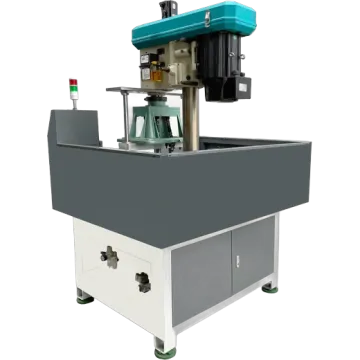
Adds a grooving function to drilling, chamfering and tapping; the sample part is a small die-casting. It suits parts with ring grooves, relief grooves or locating slots, completing all hole and groove work on one machine.
- Four operations in one machine: drill, chamfer, tap and groove
- For complex small parts where piece value is relatively high
- Semi-automatic operation, good for prototyping and small orders
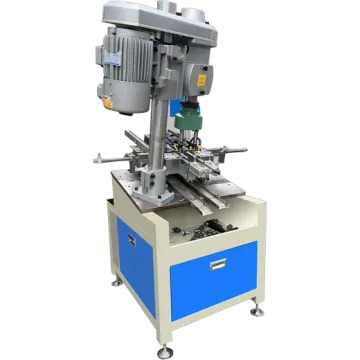
Parts are placed into the fixture by hand and the machine performs 2-up tapping automatically. The sample part is a short sleeve with a blind hole on the end face. Hand loading eliminates the bowl feeder and orienting mechanism, keeping investment low and changeover quick.
- Automatic 2-up tapping without a feeding mechanism
- Low investment and small footprint for trial production
- Changeover by swapping the fixture only; tolerant of irregular parts
Parts and Machining Close-Ups


