
Zhou Jian
- Founder, CEO of Huiju Automation and Sikong Robotics;
- Talent leader for "5G+Smart Logistics Project Group" at Yangtze River Delta Electrical Engineers Innovation Center;
- Researcher of robot control systems (RCS), smart cloud big data management systems since 2010.
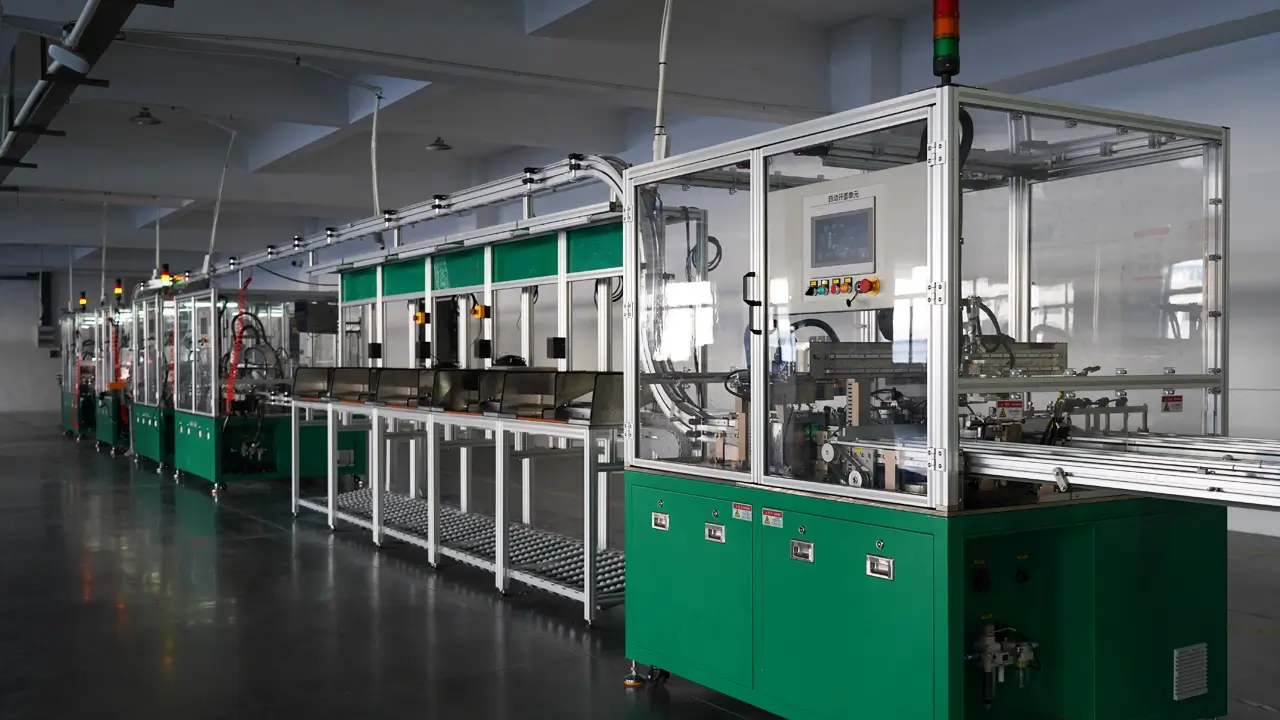
If you run an MCB factory, you have probably heard the same advice many times: automate more. The harder question is where to start. Make one poor move first, and you can spend a lot of money without doing much to change the shop floor.
Miniature circuit breakers have several parts and pass through various steps of manufacturing like assembly, welding, testing and packing. However, these steps do not affect production output equally.
In this guide you will discover how to determine the weak points of your line, which procedures are generally worth automating first, what to check before investing and how to proceed in stages.
Find Out Where Your MCB Production Line Falls Behind
First, you have to observe the production line for a couple of full shifts. Usually it is easy to notice a bottleneck. Parts pile up in front of one station while the next remains idle. It can also be useful to track a measure such as overall equipment effectiveness (OEE), which integrates availability, performance and quality into one measure.
There are certain symptoms that are worth recording:
- Uneven cycle times:One station is much slower than the others or speed varies from worker to worker.
- Repeated rework:The same problems are occurring again and again, e.g. pieces falling out or inconsistent test results.
- Heavy reliance on skilled operators:Production is heavily affected if skilled individual is not available.
- Frequent short stops:Much time is lost with little jams and manual corrections.
Replace numbers with impressions when possible. A week of simple data is often enough to show which station needs attention first.
Which MCB Processes Are Worth Automating First
There’s no one-size-fits-all approach, but some processes tend to be better candidates for automation than others.
- Repetitive Assembly Tasks
Often automation starts with assembly. The placement of microscopic components, the pushing of pieces into position and the securing of connections can be repetitious and time consuming. Manual assembly also means variability in cycle time and quality of the assembly.
You can stabilize cycle times and better plan your production by automating certain assembly procedures. It is particularly worth considering when manual assembly limits output or produces inconsistent results.
- Electrical and Performance Testing
Usually it is testing that is the hidden bottleneck. Manual testing can be time consuming and the different ways operators complete the test may impair the uniformity.
In an MCB automatic test line, units go through a set test sequence and the results are recorded. It makes sense when testing queues are growing or when test results vary between shifts.
- Feeding, Handling, and Other Repetitive Operations
Moving parts between stations offers minimal benefit but can cost an astonishing amount of operator time. Automated feeding and transport systems free workers to do tasks that require judgement and help improve the flow between stations. If workers spend more time moving parts than running equipment, this is a great fit.
The following table summarizes when each choice makes sense.
|
Process |
When to Prioritize It |
What Automation Can Improve |
|
Repetitive assembly |
Manual work limits output or consistency |
More stable cycle times and assembly quality |
|
Electrical testing |
Testing creates a bottleneck or inconsistent results |
More consistent testing and faster throughput |
|
Material feeding and conveying |
Operators spend substantial time moving parts |
Less manual handling and smoother material flow |
|
Visual inspection |
Repeated checks are slow or difficult to standardize |
More consistent detection of visible defects |
What to Consider Before Automating a Process
Once you know what stage to attack, a few practical considerations will determine if the investment makes sense.
- Expected output:Automation can offer a faster return on investment when production volumes are stable. If orders are modest or erratic, a semi-automatic device would be more suitable.
- Retrofit cost:The cost of upgrading an existing line is not the same as building a new one. Also consider installation time and lost production.
- Equipment compatibility:New machines should integrate with your existing stations, floor space and control systems.
- Changeover needs:Check how well a machine can change between multiple breaker models and how fast it can do it.
- Return on investment:Calculate payback from saving labour, fewer defects and higher output. Be conservative.
Take a Step-by-Step Approach to Automation
You don’t have to automate the whole line at once. It’s safer to fix one bottleneck at a time and run it for a bit to see if it does what you want. Track production productivity, defect rates and operator adaptation to the new equipment.
Once you have a reliable initial stage, you can link it to the next phase, such as tying automated assembly to testing. Each stage then builds on something that already works.
The order is not fixed. Some factories start with testing, others with assembly or material handling. Prioritize based on your real obstacles, quality needs and budget, not on a standard list.
Automation works best when it follows the problems you actually have. If you would like a second opinion on where to begin, Huiju Automation can help you review your line and plan a practical upgrade path. Contact us to talk through your MCB production line.